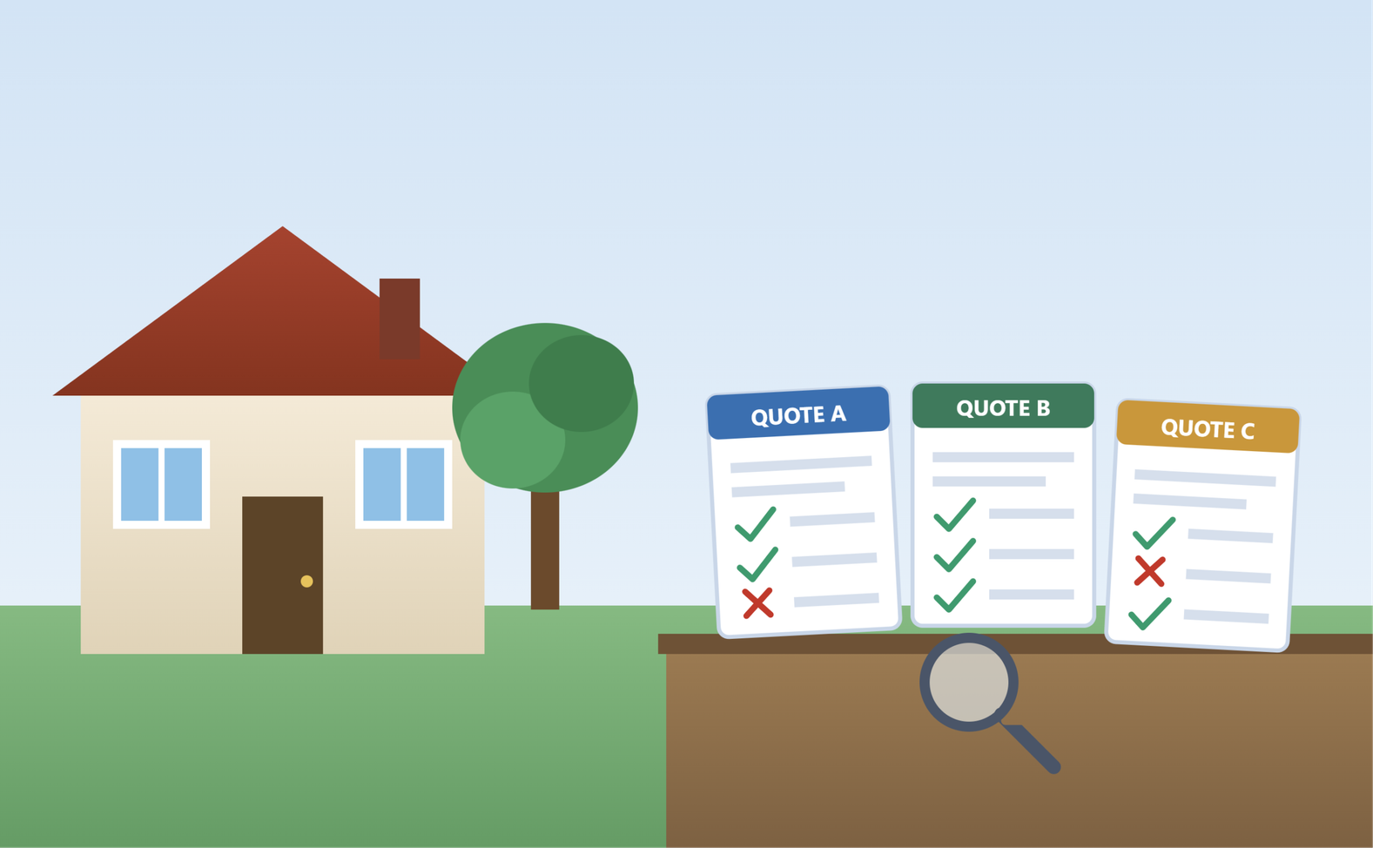
Homeowners Insurance Quotes: How to Get Accurate Quotes and Compare Them Fairly
Framed the way an independent agent coaches a first-time buyer: the lowest number on the page often isn’t the lowest-cost policy once you read what’s inside it.
Anyone who has requested several homeowners insurance quotes for the same house knows how strange the results can be. One insurer comes in noticeably lower, another sits well above it, and a third declines to quote at all. The price differences aren’t random, and they aren’t always a sign that the lower quote is the better deal.
Homeowners insurance is a contract with many moving parts: coverage limits, deductibles, exclusions, endorsements, and valuation methods. Two quotes can look similar and protect you very differently. This guide explains what insurers need to quote your home, why prices vary, and how to compare quotes so you’re judging actual protection and not just a premium.
What a Homeowners Insurance Quote Is, and Isn’t
A quote is an estimate of what an insurer would charge for a specific set of coverages, based on the information you provide. It isn’t a policy, and it isn’t a guarantee. The final premium can change after the insurer verifies details about your home, reviews your claims history, or inspects the property.
It also helps to understand the sequence. After you choose a quote, you apply, the insurer underwrites the application, and if approved, you receive a binder or policy. Until coverage is bound, you’re not insured, so avoid canceling your current policy until the new one is confirmed.
What a Standard Homeowners Policy Covers
Most homeowners policies are built from several coverage parts.
Dwelling coverage. Pays to repair or rebuild the structure of your home after a covered loss.
Other structures. Covers detached structures such as a garage, shed, or fence.
Personal property. Covers belongings like furniture, clothing, and electronics, usually subject to limits for certain categories such as jewelry or collectibles.
Loss of use. Helps pay additional living expenses, like a hotel, if a covered loss makes your home unlivable.
Personal liability. Protects you if someone is injured on your property or you accidentally damage someone else’s property, and you’re legally responsible.
Medical payments to others. Covers minor medical costs for guests injured at your home, regardless of fault.
The most common policy form for single-family homes is the HO-3, which generally covers the dwelling against a broad range of risks, except those specifically excluded, and covers personal property against listed perils. Other forms exist for condos (HO-6), renters (HO-4), and older or special homes.
What Homeowners Insurance Usually Doesn’t Cover
Exclusions are where many surprises happen. Standard policies commonly exclude or limit:
- Flood damage. Requires a separate flood policy, often through the National Flood Insurance Program or a private insurer.
- Earthquake and earth movement. Typically needs a separate policy or endorsement.
- Sewer or drain backup. Often available only as an added endorsement.
- Wear and tear, neglect, and poor maintenance.
- Certain types of mold, pests, and long-term water damage.
- Intentional damage.
- Business property and some home-based business activities, which may need separate coverage.
Which exclusions apply, and what endorsements are available, vary by insurer and state, so read the actual policy language and ask what’s covered.
What Insurers Need to Give You an Accurate Quote
The more precise your information, the more reliable the quote. Typical details include:
- Address and ZIP code. Location drives much of the price.
- Year built and square footage.
- Construction type and materials, such as frame, brick, or masonry.
- Roof age, material, and condition.
- Updates to electrical, plumbing, and heating systems, especially in older homes.
- Number of stories, foundation type, and features such as a pool, trampoline, or finished basement.
- Protective features, such as smoke detectors, security systems, and sprinklers.
- Claims history for the home and for you, often going back several years.
- Mortgage information, since lenders typically require coverage and may be listed on the policy.
- Coverage preferences, including limits, deductible, and optional endorsements.
Estimating the wrong square footage or leaving out a roof replacement, for example, can skew a quote in either direction and lead to a corrected price later.
Why Homeowners Insurance Quotes Differ So Much
Different rating models. Each insurer uses its own formulas, weighting factors like location, home characteristics, and claims history differently.
Different risk appetites. One company may want more business in your area, while another may be limiting exposure to certain regions, roof types, or home ages.
Different assumptions about rebuilding cost. Insurers estimate what it would cost to rebuild your home using their own cost data, which affects the dwelling limit they recommend.
Different deductibles and coverage terms. A lower premium may reflect a higher deductible, lower limits, or narrower coverage.
Claims and credit factors. Many insurers consider claims history, and in most states, a credit-based insurance score. Some states restrict or prohibit the use of credit in homeowners insurance pricing, so this varies.
Discounts. Bundling, protective devices, new roofs, claims-free history, and other discounts differ by insurer and by state.
What Drives the Cost of Homeowners Insurance
Location. Local weather risks, crime rates, wildfire exposure, proximity to the coast, distance to a fire station or hydrant, and local building costs all influence pricing. Coastal and storm-prone states often have special wind or hurricane deductibles, commonly set as a percentage of the home’s insured value instead of a flat dollar amount.
Home characteristics. Age, construction, roof condition, and the cost to rebuild matter.
Coverage amounts. Higher dwelling and liability limits raise the premium.
Deductible. A higher deductible usually lowers the premium but increases what you pay out of pocket after a loss.
Claims history. Prior claims, including on the property before you owned it, can affect rates.
Pets and property features. Certain dog breeds, pools, and trampolines can raise liability concerns.
Bundling. Many insurers discount homeowners insurance when it’s combined with auto insurance.
How to Compare Homeowners Insurance Quotes Fairly
Comparing premiums alone is how many people end up underinsured. A fair comparison requires matching the coverage first.
Compare the dwelling limit. Make sure each quote reflects a realistic rebuild cost. A lower quote that insures the home for less may leave you short after a major loss.
Compare the deductible, including any separate wind, hail, or hurricane deductible, and whether it’s a flat amount or a percentage.
Check how losses are valued. Replacement cost pays to replace items without subtracting depreciation. Actual cash value subtracts depreciation, which can reduce a payout noticeably. Check how both the dwelling and the roof are handled, since some policies pay roofs on a depreciated schedule.
Compare liability limits and medical payments.
Look at endorsements and extended coverages, such as extended replacement cost, ordinance or law coverage (which helps pay for code upgrades required during rebuilding), water backup, and scheduled personal property for valuables.
Compare personal property valuation. Replacement cost on belongings usually costs more than actual cash value but provides better protection.
Note the exclusions. Look for anything that matters in your area, such as wind or hail limits, or water damage restrictions.
Here’s a hypothetical illustration of why this matters, without any prices. Imagine Quote A insures the dwelling for $300,000 with a $1,000 deductible and pays roof claims at replacement cost. Quote B insures the dwelling for $250,000 with a 2 percent wind deductible and pays roof claims on a depreciated schedule. Quote B may carry a lower premium, but it also protects you less in several ways. Without comparing those terms, you’d be comparing two different products as if they were the same.
Checking the Insurer, Not Just the Price
Financial strength. Independent rating agencies such as AM Best assess an insurer’s ability to pay claims. A strong rating matters most after widespread events like major storms.
Complaint records. Your state’s insurance department typically publishes complaint data. The National Association of Insurance Commissioners also offers consumer tools.
Claims reputation. Reviews and complaint patterns can offer clues, though no single source tells the whole story.
Service model. Some insurers operate through local agents, others primarily online. Neither is inherently better, but it affects how you get help.
Where to Get Quotes
Directly from insurers. Online or by phone, which lets you see each company’s tools and coverage options.
Captive agents. Represent a single company and can explain its products in depth.
Independent agents and brokers. Can request quotes from multiple companies and help compare coverage differences.
Online comparison tools. Can be a convenient starting point, though not all insurers participate, and the quotes may be estimates until verified.
Getting at least a few quotes, using the same coverage specifications for each, is a sound way to see the range.
What If You Can’t Find Coverage?
In some areas, particularly those with high wildfire, hurricane, or other catastrophe risk, standard insurers may limit new policies or decline some homes. Many states offer an insurer of last resort, often called a FAIR Plan or a state-backed residual market option, which can provide basic coverage when the regular market won’t. These plans usually come with narrower coverage and often higher costs, so they’re generally a fallback rather than a first choice. An independent agent familiar with your area can explain your options.
State-Level Differences to Keep in Mind
Homeowners insurance is regulated state by state. Coverage forms, available discounts, rules on credit-based pricing, wind and hurricane deductible structures, and the availability of last-resort plans all differ. Flood and earthquake risks also vary widely by region. Local knowledge matters, so an agent or your state insurance department can clarify what applies where you live.
Steps for Getting and Comparing Quotes
- Gather your home details. Include year built, square footage, roof age, updates, and claims history.
- Decide on coverage levels first. Choose a dwelling limit, deductible, and liability limit you’d like to compare across quotes.
- Request at least three quotes, using identical specifications.
- Check for flood and earthquake needs based on your location, and ask about separate policies.
- Compare valuation methods for the dwelling, roof, and belongings.
- Review deductibles, including wind, hail, and hurricane provisions.
- Ask about discounts, including bundling, protective devices, and claims-free history.
- Verify the insurer’s financial strength and complaint record.
- Read the policy before you buy. The quote is a summary, and the policy is the contract.
- Re-shop periodically, especially after major updates like a new roof or at renewal if your premium jumps.
Common Mistakes to Avoid
- Choosing the lowest premium without matching coverage.
- Underinsuring the dwelling based on market value rather than rebuild cost.
- Overlooking separate wind or hurricane deductibles.
- Forgetting that flood and earthquake aren’t typically covered.
- Providing inaccurate home details, which can lead to price changes or claim problems.
- Canceling an existing policy before the new one is active, which can create a gap, and mortgage lenders typically require continuous coverage.
- Never reviewing coverage after renovations or major purchases.
Final Thoughts
Homeowners insurance quotes are most useful when you compare like with like. Decide on the coverage you want, request the same specifications from several insurers, and look closely at deductibles, valuation methods, and exclusions before you look at the price. A lower premium that leaves you underinsured or caps your roof payout isn’t a bargain, and a slightly higher one that covers you properly after a major loss often is.
8. FAQs
How many homeowners insurance quotes should I get?
Many people compare at least three, using the same coverage limits and deductibles for each so the comparison is fair. An independent agent can pull several quotes at once.
Why are my homeowners insurance quotes so different?
Insurers use different rating models, risk appetites, and assumptions about rebuild costs. Differences in deductibles, coverage limits, and endorsements also affect price, so quotes may not be comparing identical protection.
What information do I need to get a homeowners insurance quote?
Typically your address, home’s age and size, construction type, roof details, updates to major systems, claims history, and the coverage limits and deductible you want.
Is a homeowners insurance quote a guarantee of that price?
No. The final premium can change after the insurer verifies details, reviews your claims history, or inspects the property.
Does homeowners insurance cover flood damage?
Generally not. Flood damage typically requires a separate policy, often through the National Flood Insurance Program or a private insurer.
What’s the difference between replacement cost and actual cash value?
Replacement cost pays to replace damaged items or repair the structure without subtracting depreciation. Actual cash value subtracts depreciation, which can reduce the payout.
Will my credit affect my homeowners insurance quote?
In many states, insurers may use a credit-based insurance score as one pricing factor, though some states restrict or prohibit the practice. Check your state’s rules.
What if no insurer will cover my home?
Many states have an insurer of last resort, often called a FAIR Plan or similar, which can provide basic coverage when the standard market won’t. Coverage is often narrower and costs can be higher, so an independent agent can help you explore options.